

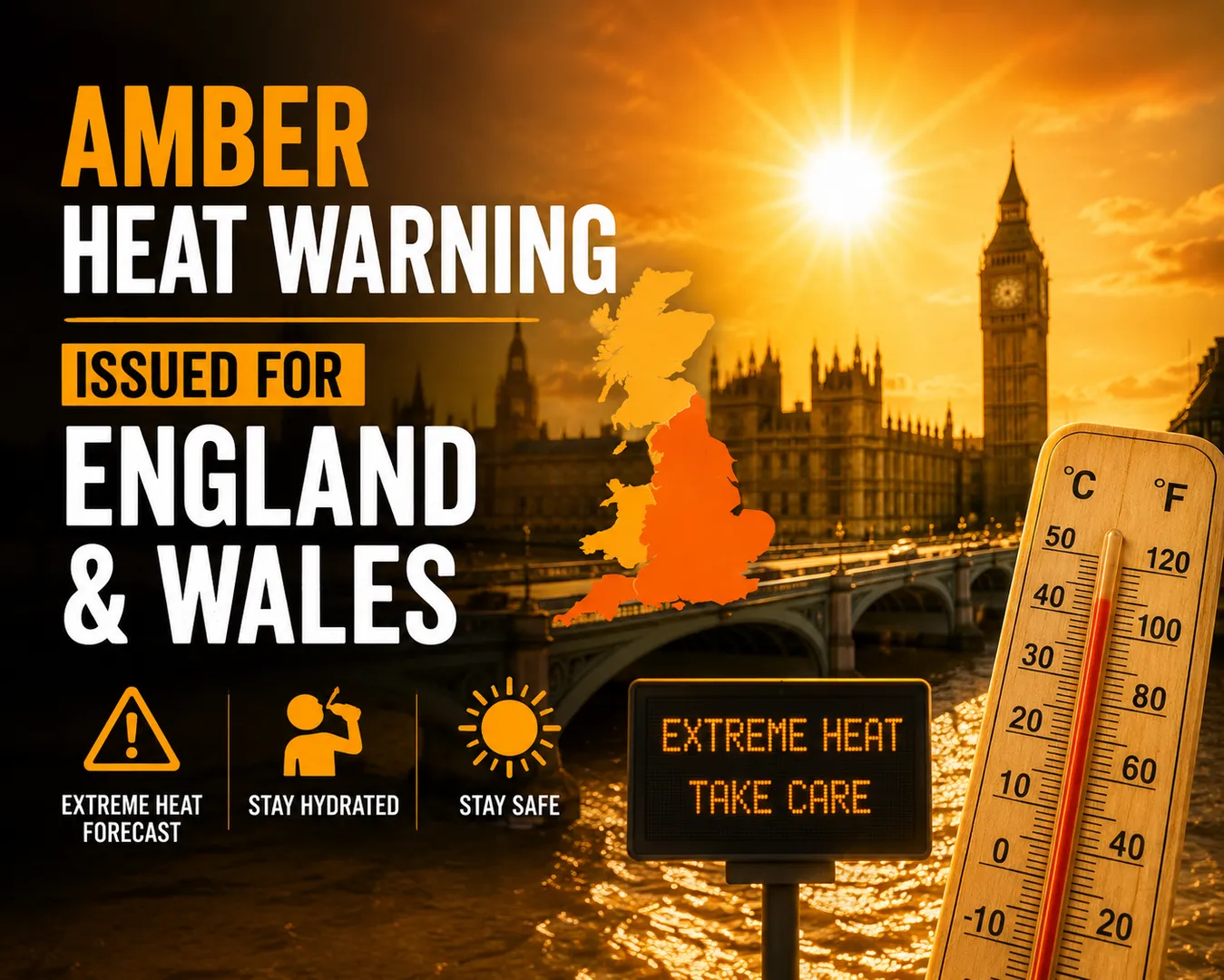
What's Happening With UK Weather Right Now?
If it's felt unusually hot this week, you're not imagining it. The Met Office has issued an amber extreme heat warning covering much of England and Wales, with temperatures expected to reach 30°C or higher in southern areas. This comes on the back of one of the earliest and hottest heatwaves the UK has seen, with temperatures already touching 35°C in late May — well above what's normal for this time of year.
What makes this spell particularly tough is the overnight heat. Many areas are experiencing what's called "tropical nights" — when temperatures stay above 20°C even at night. That means homes don't get a chance to cool down, which makes sleeping difficult and adds to the strain on your body, especially if you don't have air conditioning (which most UK homes don't).
The UK is built for cool, wet weather — not heat. Most homes, schools, offices, and public transport here are not designed to handle high temperatures. This is exactly why the Met Office and UK Health Security Agency take heat warnings seriously, even when 30°C might feel completely normal if you grew up in India, Pakistan, or anywhere in South Asia.
What Does an "Amber" Warning Actually Mean?
The UK uses a simple colour system for weather warnings — yellow, amber, and red. Each one tells you how serious the situation is and how much it could affect daily life.
An amber warning means the heat is serious enough that it could affect anyone — not just elderly people or those with health conditions. It's a signal to genuinely change your plans for the next few days, not just something to read and ignore.
Who Is Most at Risk?
- Over 65 years old — the body becomes less able to regulate temperature with age
- Pregnant — heat puts extra strain on the body during pregnancy
- Living with a heart, lung, or kidney condition
- Caring for babies or young children — they overheat much faster than adults
- Working outdoors — delivery drivers, construction, warehouse, and gig economy workers
- New to the UK — if your body isn't yet used to how UK homes trap heat without air conditioning
If you're newer to the UK, here's something worth knowing: people often assume that because they're used to hot weather back home, UK heat won't bother them. But UK humidity, combined with homes designed to retain heat for winter, can actually make a 30°C day here feel more draining than a 35°C day in Delhi or Lahore.
How to Save Yourself From This Heat — Day by Day
You don't need fancy gadgets or expensive air conditioning to get through this safely. Most of it is about smart habits — what to do, what to avoid, and when. Here's a simple morning-to-night plan to follow during a heatwave like this one.
- Open all windows first thing to let cool air in before it heats up outside
- Do your shopping, walking, or any outdoor errands now while it's cooler
- Drink 1–2 glasses of water as soon as you wake up
- Apply SPF 30+ sunscreen before stepping out, even if it's cloudy
- Have a light breakfast — fresh fruit, yoghurt, smoothies work better than heavy fried food
This is when the sun is strongest. Avoid being outside if you can. Close all curtains and blinds facing the sun to trap cool air indoors. Turn off lights and appliances that give off heat. If you must go out, walk in the shade, wear a hat, and carry water. Do NOT do laundry, ironing, or oven cooking during these hours — they add unnecessary heat to your home.
- Drink water every 30–45 minutes, even if you're not thirsty
- Eat lighter meals — salads, dal-chawal, curd rice, sandwiches, cold soups
- Avoid alcohol, too much chai, and sugary drinks — they dehydrate you
- Take a cool (not freezing) shower to bring your body temperature down
- Place a damp cloth on the back of your neck or wrists — works in minutes
- Soak your feet in cold water for 10 minutes — sounds simple but it really cools the whole body
- Open all windows once outside is cooler than inside (usually after 9–10pm)
- Place a bowl of ice or frozen water bottle in front of a fan — it acts like a poor man's AC
- Use a thin cotton sheet only — skip the duvet
- Keep a small spray bottle of water by your bed for a quick cool mist
- Take a quick lukewarm shower right before bed to lower body temperature
- If your bedroom is upstairs and too hot, sleep on the ground floor for a night or two
What to Buy From the Shop (Under £20)
A few cheap basics from your local supermarket or Amazon can make a massive difference. Here's a simple shopping list:
- Electric fan — small desk fan from Argos, Tesco, or Amazon (£10–£20)
- Cooling spray or face mist — instant relief, easy to carry
- Reusable ice packs — great for the back of the neck or to cool the bed
- Light cotton bed sheet — replace your duvet for the week
- Insulated water bottle — keeps water cold all day
- Rehydration sachets (Dioralyte or similar) — for when you've been outside a lot or feel dehydrated
- SPF 30+ sunscreen — essential, especially for outdoor work
- Blackout curtains or temporary window film — cuts indoor heat noticeably
Don't open windows during peak heat (11am–3pm) — you'll let hot air in. Don't drink alcohol or excessive caffeine — they speed up dehydration. Don't take ice-cold showers — they shock the body and can actually raise your core temperature. Don't ignore early symptoms like a headache or dizziness — that's your body warning you.
How to Spot Heat Exhaustion vs Heatstroke
Knowing the difference between heat exhaustion and heatstroke could genuinely save a life — your own or someone else's.
🟡 Heat Exhaustion (not an emergency — but act fast)
- Headache and dizziness
- Feeling sick or being sick
- Excessive sweating, cool clammy skin
- Cramps in arms, legs, or stomach
- Fast breathing or heartbeat
- Extreme tiredness or weakness
- Intense thirst
🔴 Heatstroke (medical emergency — call 999)
- Still feels very unwell after 30 mins of cooling down
- Body temperature of 40°C or above
- Fast breathing or shortness of breath
- Confusion, slurred speech, or fits
- Hot skin that is not sweating
- Loss of consciousness
Call 999 immediately. While waiting for help: move the person somewhere cool, get them to lie down, cool their skin with a cold wet cloth or cold water, and fan them. Give them water to sip if they're able to drink. Do not give them aspirin or paracetamol.
How to Stay Safe and Cool This Week
Avoid the Hottest Part of the Day
Try to stay indoors or in the shade between 11am and 3pm, when the sun is strongest. If you need to go out, plan errands for the early morning or evening instead.
Keep Your Home Cool
Close curtains or blinds on windows that face the sun during the day. Open windows at night when it's cooler to let air circulate. Avoid using the oven for cooking on the hottest days.
Drink Water Regularly — Don't Wait Until You're Thirsty
Keep a water bottle with you and sip regularly throughout the day. Limit tea, coffee, and alcohol, as these can make dehydration worse.
Check on Elderly Neighbours, Family, or Friends
If you know someone older or living alone, a quick phone call or visit to check they're coping with the heat genuinely makes a difference.
If You Work Outdoors, Pace Yourself
Take regular breaks in the shade, wear light-coloured loose clothing, use sun cream, and drink water throughout your shift — don't wait for a long break to rehydrate.
Never Leave Anyone in a Parked Car
Car interiors heat up dangerously fast in direct sun — never leave children, elderly relatives, or pets in a parked vehicle, even for a few minutes.
- Wear light, loose-fitting cotton clothing in pale colours
- Use a damp cloth on your neck and wrists to cool down quickly
- Keep a small fan or spray bottle of water handy at home or work
- Eat lighter meals — salads and cold foods are easier on the body than heavy, hot meals
- Travel with water if commuting — UK trains and tubes can get extremely hot and crowded in summer
- Apply sunscreen (SPF 30+) even on cloudy days during a heatwave
When Will It Cool Down?
According to the Met Office, the heat is expected to ease gradually rather than break suddenly. Warm and humid conditions are likely to continue through the early part of the week, with thunderstorms developing as the heat meets cooler air moving in from the Atlantic. These storms can bring their own risks — flash flooding, lightning, and travel disruption — so it's worth keeping an eye on local forecasts even after the heat itself eases.
Frequently Asked Questions
Yes. Amber is the second-highest level of warning the Met Office issues, just below red. It means the heat could affect anyone's health, not only vulnerable groups, and that you should take active steps to stay safe rather than just carry on as normal.
UK homes are built to retain heat for the cold winters, not release it in summer — most don't have air conditioning. Combined with high humidity, this can make UK heat feel more draining than similar or higher temperatures in countries used to consistent heat.
Heat exhaustion causes symptoms like dizziness, sweating, and tiredness, and usually improves with rest, fluids, and cooling down within 30 minutes. Heatstroke is more serious — body temperature rises above 40°C, confusion or fits can occur, and it requires immediate emergency medical attention by calling 999.
Generally yes — an amber warning is not a lockdown. Schools and workplaces typically stay open but should take precautions like more water breaks and reduced outdoor activity. If you have specific health concerns, it's worth checking with your employer or your child's school about their heat plan.
The Met Office expects the heat to ease gradually through the week, with thunderstorms developing as cooler Atlantic air moves in. Exact timing can shift, so it's worth checking the Met Office website or app for the latest local forecast.
We Are Here to Help
Planning to Explore the UK?
From visa consultation and business setup to understanding how UK systems work — Rohit Kamboj Tracker is here to help. Book a consultation today and get clear, reliable guidance from day one.
📅 Book a Consultation